Questions and answers
What is the difference between rubber suspension parts and polyurethane parts?
Can I install polyurethane parts myself?
Is polyurethane suitable for my car brand?
How long will polyurethane in my suspension last?
Durability
Due to the high strength and elasticity of the material, the service life of the part increases by 3-5 times compared to conventional rubber bushings and silent blocks.
Durability
During operation, suspension components are constantly exposed to aggressive environments (dirt, sand, chemicals, etc.), which act as an abrasive and cause wear. Polyurethane bushings have high wear resistance.
Versatility
Polypro offers products for various car models, which can be selected from the catalog on the website. If necessary, an individual order can be made, taking into account the manufacture of fasteners.
Improving car performance
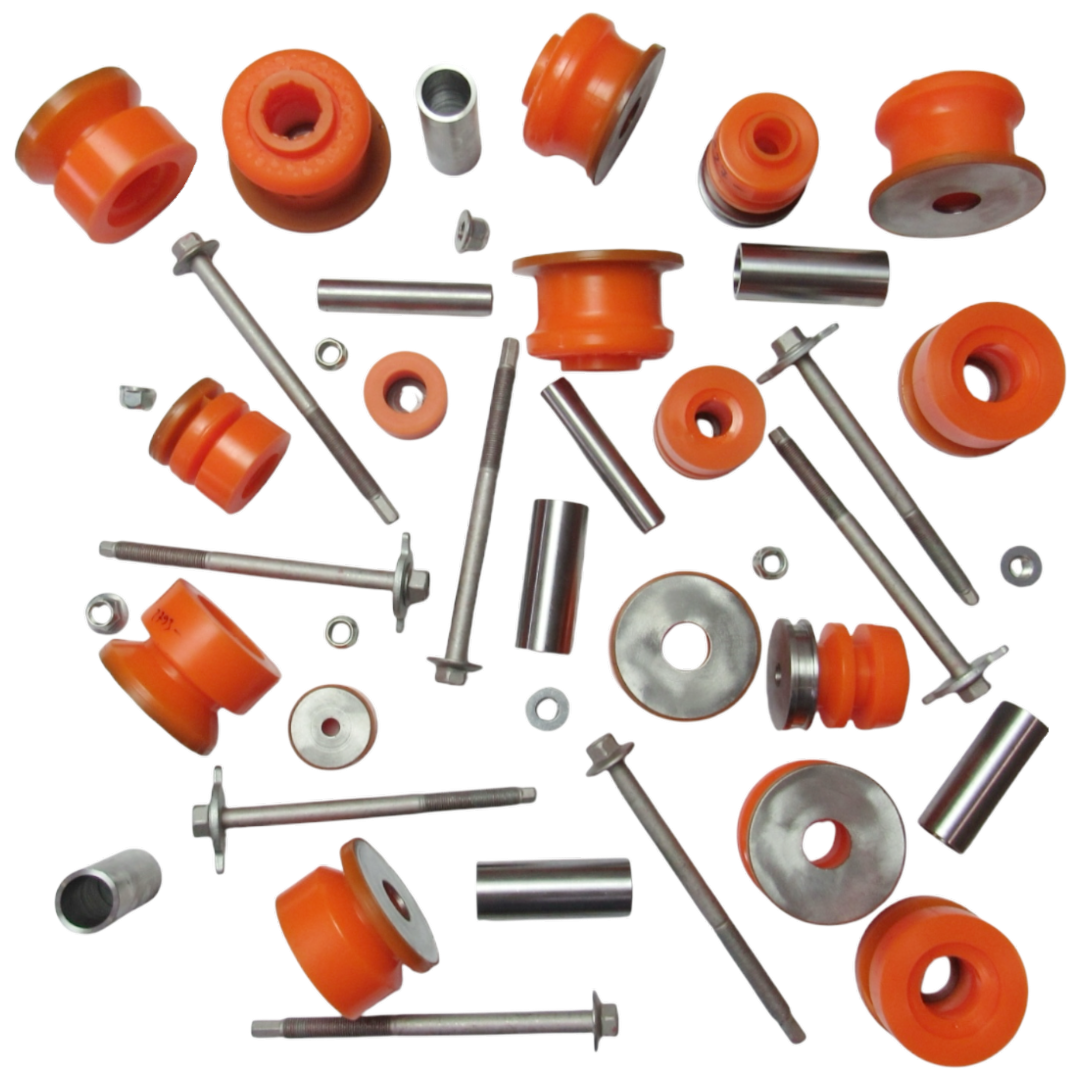
Polyurethane stabilizer bushings and silent blocks do not lose their characteristics during the operation of the car, thereby ensuring good resistance to loads, as well as reducing the level of vibration when driving on bad roads due to good elasticity.
Where Polyurethane Spare Parts Are Used
Among the main suspension parts of a car where polyurethane materials are used, the following can be highlighted:
- Front and rear suspension control arm bushings
- Stabilizer bars and silent blocks
- Trailing arm bushings
- CV joint and ball joint boots
- Air suspension parts
- Strut mounting bushings
- Suspension bump stops
Besides suspension parts, polyurethane spare parts are also used in other vehicle components and assemblies, replacing conventional rubber consumables. These include: engine mounts, crankshaft damper pulley, subframe silent blocks, link bushings, mounting connections of assemblies, etc.
The scope of application is not limited to passenger cars only. Polyurethane silent blocks and bushings can also be purchased for trucks, trailers, and special equipment. Considering the large weight of these vehicles, we use polyurethane material, which increases the reliability of the components compared to conventional rubber.